
There's a specific kind of quiet that happens on the drive home from a trade show. It's the quiet where you're doing the math in your head, flights, booth space, the build, the staff hours, and comparing it against a stack of business cards that doesn't feel like it adds up.
If that sounds familiar, you're not alone. Plenty of exhibitors leave shows with a booth that looked good, got a few compliments, and still didn't do the one thing it was actually there to do: turn strangers into leads.
The instinct is usually to blame the show itself. Wrong audience, bad foot traffic, off timing. Sometimes that's true. But more often than not, the real problem was decided months earlier, back when the booth was just a floor plan and a mood board.
Looking good and working hard aren't the same thing
A booth can be visually stunning and still fail commercially. Beautiful lighting, a sleek counter, an eye-catching backdrop, none of that guarantees a single conversation happens inside it.
What actually drives conversions is much less glamorous: sightlines that pull people in from the aisle, an entry point that doesn't feel like a wall, staff who aren't boxed in behind a counter, and a layout that gives visitors a reason to stop instead of just glance and keep walking.
This is where the gap between an average build and a genuinely strategic one shows up. A trade show booth design company that only thinks in terms of aesthetics will hand you something photogenic. A company that thinks about behavior, how people actually move through a space under time pressure, builds something that performs.
The traffic problem nobody talks about
Most exhibitors assume foot traffic is about location. Get a good spot near the entrance, and people will come. That helps, sure, but it's not the whole story.
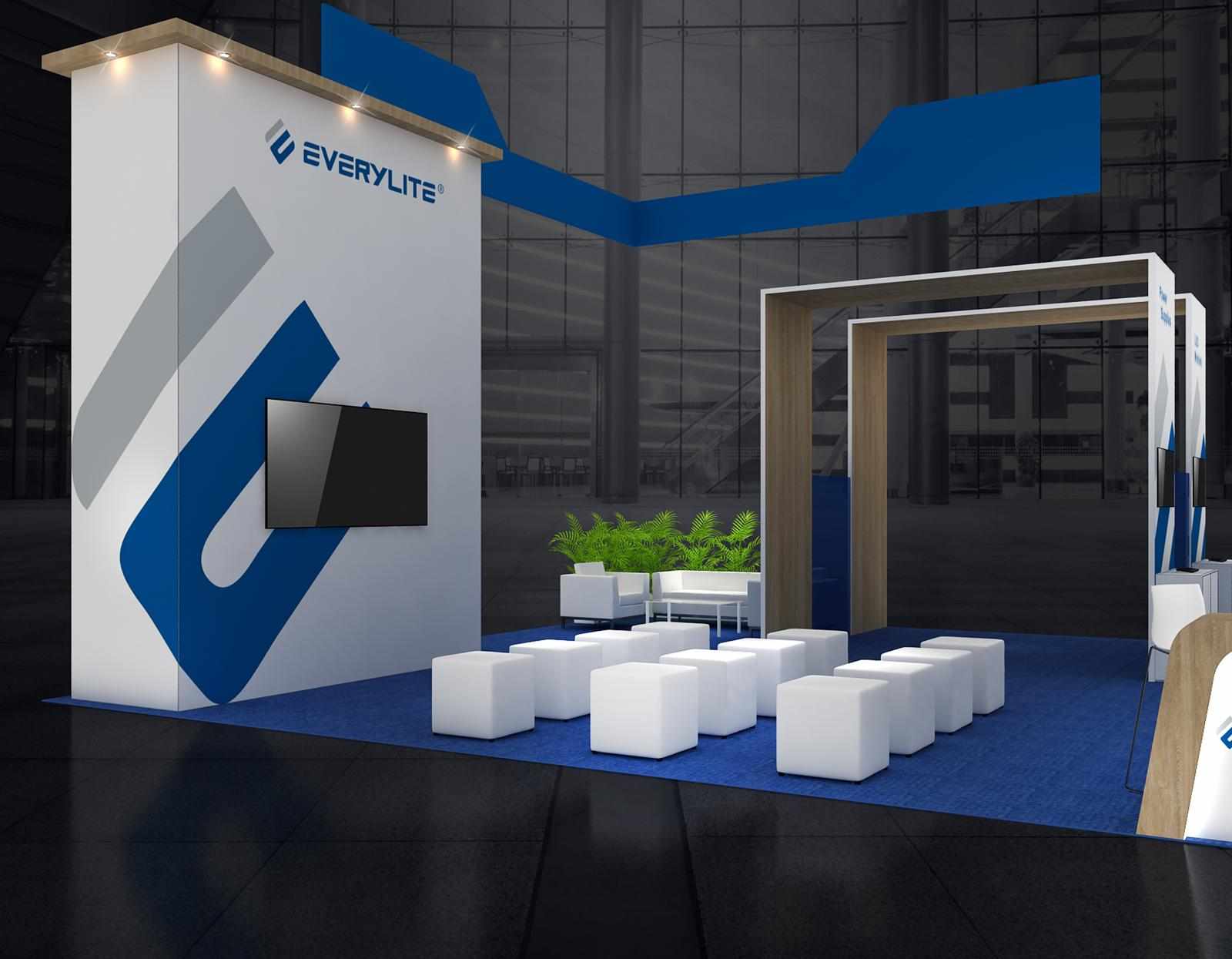
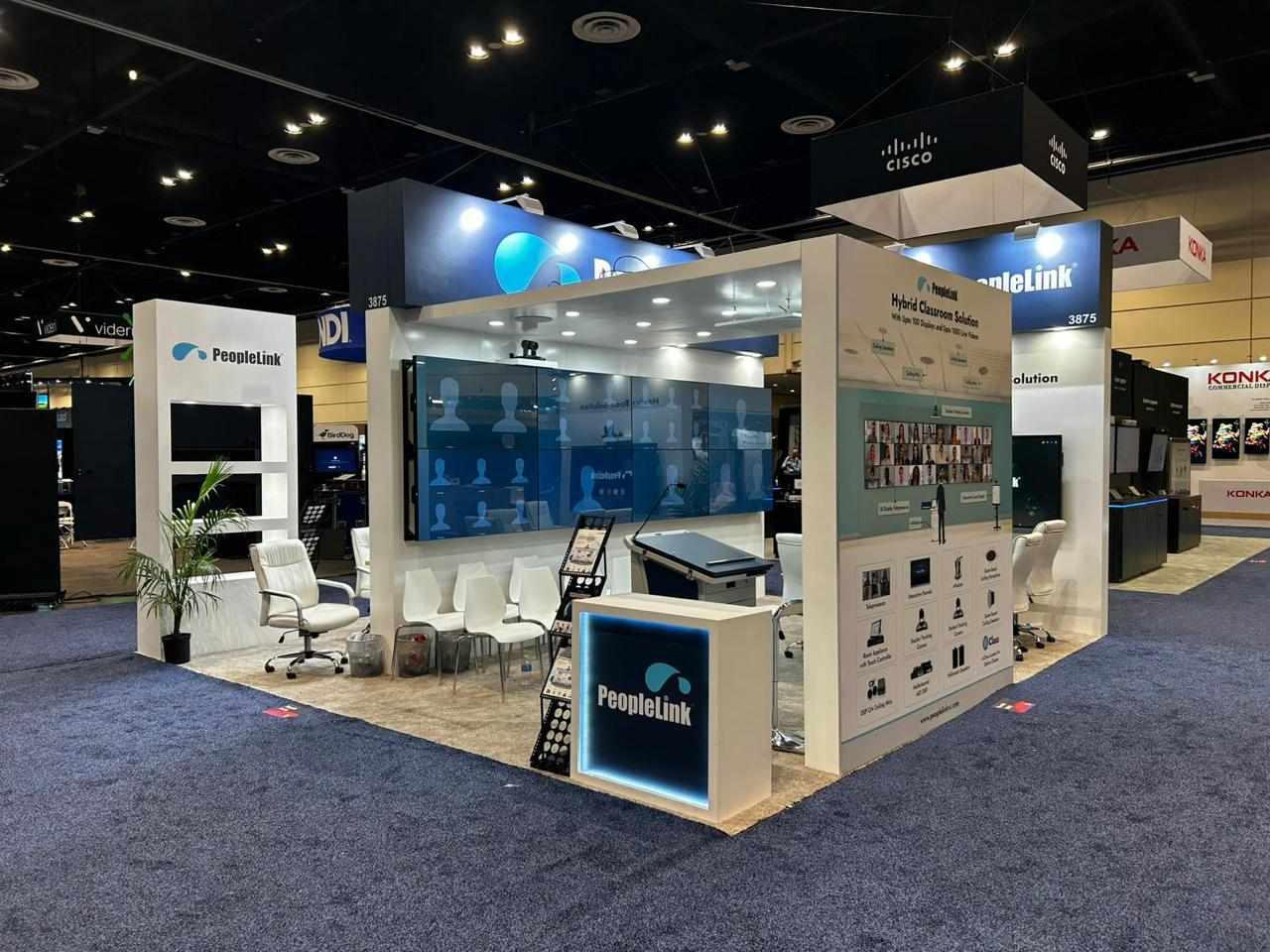
Watch any show floor for ten minutes and you'll notice something: people don't wander into enclosed spaces. They walk past anything that feels like it requires commitment, a step up, a narrow entrance, a counter blocking the view of what's behind it. Open, low-barrier layouts consistently pull more visitors than closed-off ones, even in identical locations.
This is a design decision, not a luck-of-the-draw one. It's also exactly the kind of thing that separates the trade show design companies who understand crowd behavior from the ones who are simply good at building attractive structures.
When the build itself becomes the problem
There's another layer to this that rarely gets discussed until it's too late: construction quality. A booth that arrives late, goes up crooked, or has a wobbly counter on day one doesn't just look unprofessional, it actively pushes people away. Visitors notice more than exhibitors think they do.
This is where working with an experienced exhibition booth construction company matters just as much as the design itself. A brilliant concept means very little if it can't be built accurately, on time, and sturdy enough to survive three days of a busy show floor. Design and construction really need to be treated as one continuous process, not two separate vendors who barely talk to each other.
Staff placement quietly kills more conversations than anything else
Here's a pattern that shows up constantly: exhibitors invest heavily in the physical booth and then place staff exactly where they shouldn't be, tucked behind counters, clustered near the back, or standing in tight groups chatting with each other instead of facing the aisle.
Good booth design accounts for this. It creates natural standing points near the front, sightlines that let staff see visitors approaching, and open zones that don't force an awkward "may I help you" moment the second someone steps inside. Among trade show booth design companies, the better ones will actually walk through staff flow with you before the show, not just hand over a finished structure and wish you luck.

Small changes, bigger returns
The frustrating part is that fixing this rarely means a bigger budget. It usually means smarter decisions:
· Widening the entry point instead of narrowing it for "impact"
· Moving product displays away from the front so they don't block visibility into the booth
· Creating one or two low-pressure interaction points instead of a single big reveal
· Designing storage and back-of-house space so it doesn't eat into visitor area
None of this requires reinventing the booth. It requires a design partner who's thinking about the visitor's experience walking in, not just how the render looks in a pitch deck.
The real question to ask before your next show
Before signing off on a concept, it's worth asking plainly: does this design give people a reason to stop, or does it just give them something to look at?
That one question separates a booth that photographs well from one that actually earns its budget back. And it's usually the difference between the exhibitors who dread the post-show ROI conversation and the ones who walk away with a stack of leads worth following up on.
If your last show left you with more compliments than conversations, the issue probably wasn't the audience, it was the layout they walked past. Sometimes the fix isn't a bigger booth. It's a smarter one.


Write a comment ...